Understanding the Physical Demands of the Job
Working as a firefighter and paramedic is one of the most physically demanding careers I could imagine. Every day on the job, I am carrying heavy equipment, climbing stairs in full gear, lifting patients, and navigating unpredictable and often dangerous situations. The work requires not just raw strength, but endurance, agility, and mental focus. Physical fitness is not a luxury in this line of work—it is a necessity. Without proper preparation, it would be impossible to perform safely or effectively, and the people relying on me could be put at risk.
Building a Strong Foundation
Functional strength is at the core of my training routine. Functional strength focuses on exercises that mirror the movements we use on the job. Squats, deadlifts, presses, and pulling motions are all critical because they help build the strength needed to lift patients or carry heavy gear. Grip strength is another key component. From hauling hoses to operating rescue equipment, your hands often do more work than you might realize. I include exercises that target forearms and grip as part of my regular routine to ensure I can handle whatever comes my way.
Endurance is equally important. Strength alone is not enough when responding to a fire, performing CPR, or assisting multiple patients over a long shift. Cardiovascular fitness ensures that I can sustain energy and maintain focus during prolonged emergencies. Running, rowing, cycling, and high-intensity interval training are all staples in my program. Combining strength and endurance allows me to perform efficiently under both physically and mentally taxing conditions.
CrossFit for Functional Fitness
CrossFit has been a major part of my training since I was a teenager, and it continues to influence the way I prepare for work. What I love about CrossFit is that it emphasizes functional movements, high intensity, and a mix of strength, speed, and endurance. Many of the exercises replicate real-world movements that firefighters and paramedics perform daily. For example, lifting weighted sandbags, carrying heavy objects, and performing quick, explosive movements all translate directly to tasks on the job.
Beyond the physical benefits, CrossFit teaches mental toughness. During challenging workouts, you have to push through discomfort while maintaining proper technique and focus. That mental discipline translates directly to emergency situations, where staying calm and making clear decisions under pressure can save lives.
Recovery as Part of Performance
One of the most overlooked aspects of fitness for first responders is recovery. Pushing your body to the limit without proper rest and recovery is a recipe for injury. For me, recovery includes getting adequate sleep, proper nutrition, and mobility work such as stretching, foam rolling, and yoga. Recovery days are not wasted time—they are a critical part of maintaining strength, flexibility, and overall performance. Listening to your body and allowing time for repair ensures you can perform consistently over time rather than risking burnout or injury.
Nutrition for Strength and Energy
Nutrition plays a central role in functional fitness. I focus on whole foods that provide sustained energy throughout long shifts. Lean proteins support muscle repair and recovery, carbohydrates fuel endurance, and healthy fats help with joint health and reduce inflammation. Staying hydrated is also critical, especially during physically demanding work or workouts. I pay attention to meal timing to ensure that I have energy when I need it most, whether for a workout, a shift, or a high-stress call. Proper nutrition ensures that I can perform at peak levels and recover effectively.
Job-Specific Training
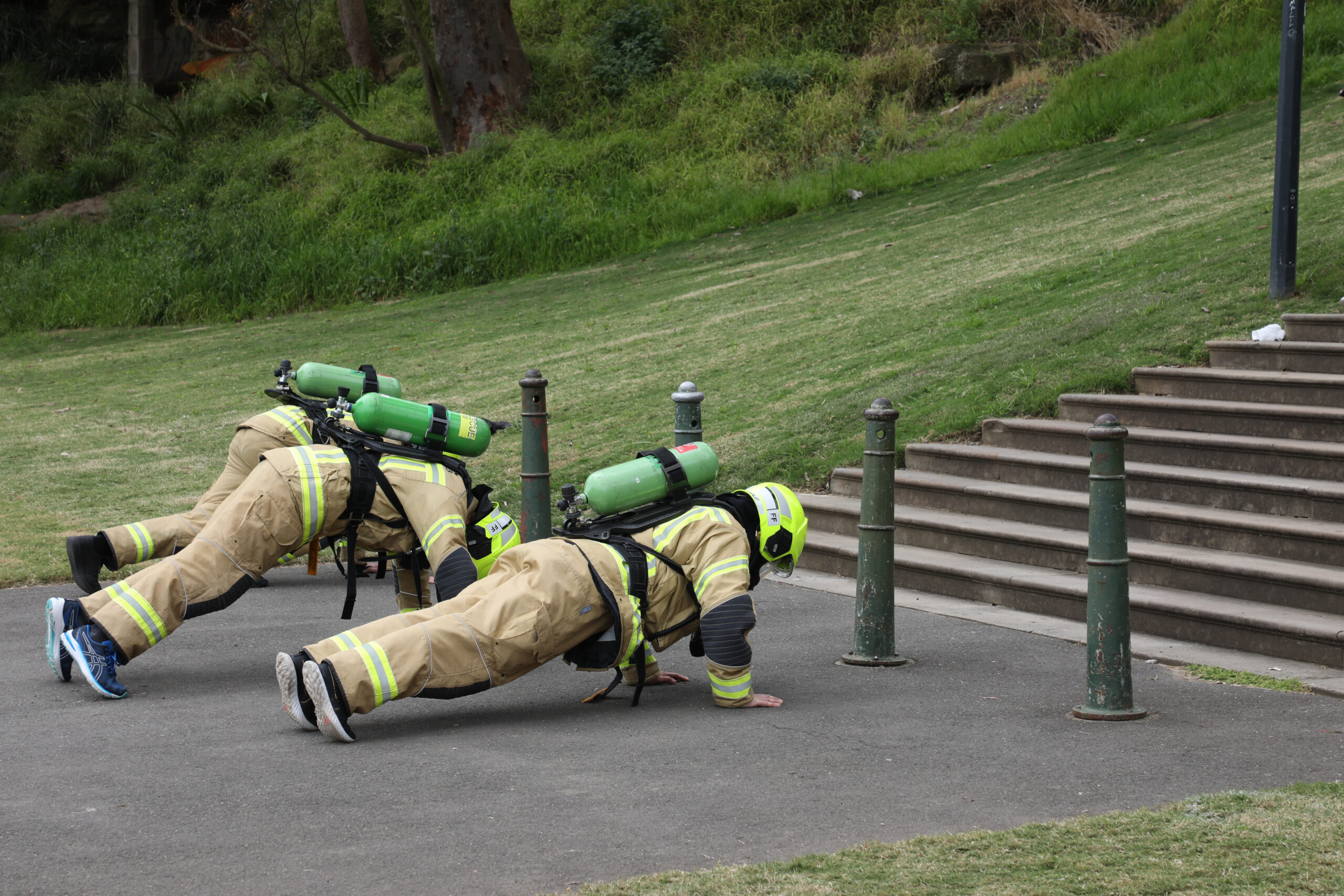
Beyond gym workouts, I include exercises that simulate real-world scenarios. Carrying a weighted dummy up stairs, lifting heavy objects repeatedly, and practicing quick movements in gear are all part of my training. These exercises prepare me physically and mentally for the unpredictable challenges I face on the job. The goal is to make my body familiar with the movements and energy demands required in real emergency situations so that when a call comes in, I am ready to respond efficiently and safely.
Mental Resilience Through Fitness
Physical preparation is only part of the equation. Mental resilience is equally important. Pushing through intense workouts builds confidence and discipline. It teaches you to remain calm under pressure, which is essential when responding to emergencies. When your body is conditioned to handle stress, your mind naturally becomes stronger as well. Fitness, for me, is not just about building muscles or endurance—it is about building the mental fortitude to stay composed and effective in high-pressure situations.
Balancing Fitness with Life
Maintaining functional strength and endurance is challenging, especially when balancing work, family, and other responsibilities. I integrate workouts into my daily schedule in ways that fit around shifts and personal commitments. Some days I focus on strength, others on endurance or mobility, and some days involve combination workouts that simulate real-life tasks. Fitness is not separate from life—it is part of how I prepare to perform well in every aspect of my career and personal responsibilities.
Functional strength and endurance are essential for anyone working as a firefighter or paramedic. It is not enough to be strong or fast—you need a combination of strength, endurance, agility, and mental resilience to perform effectively in demanding environments. CrossFit, job-specific training, proper nutrition, and recovery all play critical roles in preparing your body and mind for the challenges of emergency response.
For me, functional fitness is more than a routine—it is a tool that allows me to protect others, perform my duties safely, and maintain the resilience necessary for a high-stress career. Building strength and endurance is not just about physical performance; it is about being ready for anything, every single day.